Thursday, June 4, 2020

Unparalleled Safety Measures for Patients and Staff at Manipal Hospitals


This may be the perfect antidote to the lockdown blues, the perfect way to bounce back with great energy in the post COVID-19 world. Game Theory gives an opportunity for users to play a sport of their choice near their home by connecting them with other people and by providing them with facilities and the equipment to do so.

It is a sports-tech startup that started with the aim to make playing everyday sports as easy as it was when they were kids, and in the process build close-knit communities. A member can see the nearest available Game Theory sports facility and book a slot through the app. The app also matches people with similar skill-levels who wish to play.

“We believe a centre should not be more than a 15-minute drive from any member. You open the app and in 10 seconds book your first game for a price less than that of a cup of coffee. You don’t need a racket, you don’t even need shoes. You just need to show up,” says Sudeep Kulkarni, Founder of Game Theory.

Sudeep shares that the primary aim is to make playing sports convenient, fun and hassle-free. Apart from venues, and good game partners, Game Theory also provides sports equipment on rent, coaching sessions and a chance to take part in leagues and competitions.

Automatic scoring, statistics and cameras at all facilities elevates the experience, but the biggest draw, is the matchmaking. The Game Theory app uses specialized skill-rating algorithm to continuously update skill levels with every match, so a player will be able to match with a person of similar skill and have a good experience every time. Players will also be on a leader board and they will be able to see where they stand in their centre, area or the entire city.

The founders of Game Theory – Sudeep Kulkarni, Vivek Chandran (COO) and Surakshith B (CTO) know what they are doing. They previously started The Tribe, a class-based fitness startup that was later bought by Cult.Fit.

“We started by building three facilities of Badminton, Squash and Swimming in Bangalore. We now have over 6,000 paying customers. In March 2020, after a year of running facilities and during our second month at Techstars, we expanded by five facilities in just two weeks,” says Sudeep talking about his plans for scaling.

With their asset-light model, Game Theory partners with existing facilities, standardizes them, and runs the show on a revenue-share basis. Technology like automatic light control and inventory management ensures efficient operations and lower costs. In areas where facilities don’t exist, they partner with landlords to build courts to utilize idle real estates like terrace tops and empty plots.

Game Theory’s goal now is to have 3,000 courts, adding tennis, football and cricket, and get more than 320,000 users on board by expanding in Bengaluru and to Chennai, Hyderabad and Delhi/NCR in the next three years.

They are also targeting fitness users, who are currently left in limbo from shared spaces being shut down due to COVID-19. There are 60 lakh people in India paying over Rs 2,500 per month on fitness alone. The founders think of this as their “demonetisation-Paytm” moment to make sports every person’s fitness routine.

Game Theory centres are rolling out their technology to partnering facilities without a fee to help facility owners get back on their feet by getting in more customers through the door.

Game Theory is one of the ten startups that successfully completed the mentorship-driven Techstars Bangalore Accelerator's 2020 programme recently. The intensive programme provides support to the startups through an investment of $120,000 in each company, mentorship and support resources as they develop and refine aspects of their businesses to enhance product-market fit and position themselves to scale.

Wednesday, June 3, 2020

Game Theory Aims to Facilitate More than 3,20,000 Sports Enthusiasts through their Mobile App


This may be the perfect antidote to the lockdown blues, the perfect way to bounce back with great energy in the post COVID-19 world. Game Theory gives an opportunity for users to play a sport of their choice near their home by connecting them with other people and by providing them with facilities and the equipment to do so.

It is a sports-tech startup that started with the aim to make playing everyday sports as easy as it was when they were kids, and in the process build close-knit communities. A member can see the nearest available Game Theory sports facility and book a slot through the app. The app also matches people with similar skill-levels who wish to play.

“We believe a centre should not be more than a 15-minute drive from any member. You open the app and in 10 seconds book your first game for a price less than that of a cup of coffee. You don’t need a racket, you don’t even need shoes. You just need to show up,” says Sudeep Kulkarni, Founder of Game Theory.

Sudeep shares that the primary aim is to make playing sports convenient, fun and hassle-free. Apart from venues, and good game partners, Game Theory also provides sports equipment on rent, coaching sessions and a chance to take part in leagues and competitions.

Automatic scoring, statistics and cameras at all facilities elevates the experience, but the biggest draw, is the matchmaking. The Game Theory app uses specialized skill-rating algorithm to continuously update skill levels with every match, so a player will be able to match with a person of similar skill and have a good experience every time. Players will also be on a leader board and they will be able to see where they stand in their centre, area or the entire city.

The founders of Game Theory – Sudeep Kulkarni, Vivek Chandran (COO) and Surakshith B (CTO) know what they are doing. They previously started The Tribe, a class-based fitness startup that was later bought by Cult.Fit.

“We started by building three facilities of Badminton, Squash and Swimming in Bangalore. We now have over 6,000 paying customers. In March 2020, after a year of running facilities and during our second month at Techstars, we expanded by five facilities in just two weeks,” says Sudeep talking about his plans for scaling.

With their asset-light model, Game Theory partners with existing facilities, standardizes them, and runs the show on a revenue-share basis. Technology like automatic light control and inventory management ensures efficient operations and lower costs. In areas where facilities don’t exist, they partner with landlords to build courts to utilize idle real estates like terrace tops and empty plots.

Game Theory’s goal now is to have 3,000 courts, adding tennis, football and cricket, and get more than 320,000 users on board by expanding in Bengaluru and to Chennai, Hyderabad and Delhi/NCR in the next three years.

They are also targeting fitness users, who are currently left in limbo from shared spaces being shut down due to COVID-19. There are 60 lakh people in India paying over Rs 2,500 per month on fitness alone. The founders think of this as their “demonetisation-Paytm” moment to make sports every person’s fitness routine.

Game Theory centres are rolling out their technology to partnering facilities without a fee to help facility owners get back on their feet by getting in more customers through the door.

Game Theory is one of the ten startups that successfully completed the mentorship-driven Techstars Bangalore Accelerator's 2020 programme recently. The intensive programme provides support to the startups through an investment of $120,000 in each company, mentorship and support resources as they develop and refine aspects of their businesses to enhance product-market fit and position themselves to scale.

Hyundai Decrypts Future Retail Experience with India’s First End-to-End Online Automotive Retail Platform ‘Click to Buy’


Details

* India’s First & Only end-to-end online car buying platform, facilitating full spectrum car purchase journey
* Online purchase facility available Pan India with 600 dealerships
* Class-leading customer experience with seamless and Interactive features including, Product demo Videos, 360 ⁰ View, sales assistance throughout the buying journey, etc
 
Hyundai Motor India Ltd., country’s first Smart Mobility Solutions Provider and the largest exporter since inception, today launched the next revolution in online automotive retail with ‘Click to Buy’, unlocking the True Potential of Digitalized Era. The new version is India’s first and only end-to-end online car buying platform, curated to provide incredible Future Retail Experience to Indian customers.

Commenting on the, ‘Click to Buy’, Mr. W S Oh, Executive Director – Corporate Planning, Hyundai Motor India Ltd., said, “Hyundai has always been a Technology Leader in the automotive domain and has pioneered the Online Automotive Retail space with India’s First end-to-end online platform ‘Click to Buy’. Aligned with our Business Slogan ‘Future Ready’, we are introducing the next generation of online car buying with ‘Click to Buy’ that enriches Customer Experience with First-in-Industry features to offer a Seamless and Convenient Online Purchase Journey. With the entire automotive ecosystem evolving around us, Digital car buying platforms such as ‘Click to Buy’ will become the New Normal”

He further added, “Since the launch of Click to Buy, we have received over 7 lakh visitors on the platform and have recorded over 15 000 Registrations in two months.”  

‘Click to Buy’ is designed to facilitate end-to-end retail of Hyundai cars online making owning a new car – contactless, safer, convenient and hassle free. With ‘Click to Buy’ Hyundai is offering access to its complete range of car models and is the only platform that covers all stages of customer purchase journey in an even more seamless and convenient manner. The one-stop solution for customers’ car ownership requirement now facilitates user experience enhancement and additional customer delight features such as –

Full-spectrum car buying journey
Transparency with On-Road Prices
Dedicated Sales Consultants
Online Finance Options from Leading Banks
Fastest Loan Approval for Pre-Approved customers
Unique deal codes for customers with additional benefits
Special online promotions
Estimated time of delivery for car purchase
Online test drive booking of sanitised cars
Home Delivery of fully sanitized cars

With Click to Buy Hyundai is catering to the needs of new-age digital customers for purchase of new Hyundai cars. All Hyundai models including All New CRETA and Spirited New VERNA are available on Click to Buy website and this would act as an additional sales channel for over 600 Hyundai Dealerships.  The platform is connected in real time across India to fulfil the needs of the millennial generation and unlike other such platforms that only offer customer bookings, Hyundai ‘Click to Buy’ is the most comprehensive online car buying platform in India facilitating an end-to-end car buying. 

10 Actionable Solutions for More Reliable, Efficient Transportation in Bangalore


Today Rocky Mountain Institute, RMI India, and Micelio published a new report, Accelerating Bangalore’s Mobility Transition: Insights from the Bangalore Urban Mobility Lab, which details 10 actionable solutions to help address Bangalore’s mobility challenges and further accelerate the transition to more reliable and efficient systems for moving people and goods. These solutions can support Bangalore’s longer-term mobility goals and also inform the near-term actions required as the lockdown to contain spread of COVID-19 is lifted.

The solutions were generated by over 150 stakeholders during a two-day workshop, hosted on 19–20 February 2020 in partnership with the Directorate of Urban Land Transport, Invest Karnataka Forum, and Department of Industries and Commerce. Participants addressed mobility challenges and developed action plans for solutions across several interrelated thematic areas including, charging and battery swapping infrastructure, data-based solutions, electric vehicle (EV) manufacturing, first and last-mile connectivity, public transport, and urban final-mile delivery.

Solutions ranged from developing data governance and technology frameworks to policy recommendations to support indigenous manufacturing and new mobility services to electric vehicle pilots with charging infrastructure. Other solutions included approaches to develop service-based public transport contracts and awareness campaigns for non-motorized transport.

One of the findings of RMI is that whole systems approaches are required to drive systemic change in mobility. “Transformational change in complex systems requires transformation at different levels of that system—to name a few areas, change requires transformation in technology, in policy, and in people and mindsets,” commented Clay Stranger, Senior Director at Rocky Mountain Institute. “The discussions at the workshop, the proposed solutions, and their next steps take into account these critical areas.”

The stakeholder generated solutions to help address many of Bangalore’s mobility challenge include:

Public Transport:
i) Develop, implement, and monitor public transport service contracts (public transport service obligation).

First- and last-mile connectivity:
ii) Promote first- and last-mile connectivity in high density corridors of the city.
iii) Design and amend policy and regulations to promote new modes of first- and last-mile connectivity.

Data-based solutions (including hardware and software) to enable new mobility and technologies:
iv) Implement a data governance and technology framework.

Charging and battery swapping infrastructure:
v) Implement an EV charging and swapping data collection and sharing program.
vi) Establish an EV infrastructure pilot for multiple vehicle use cases.

Electric vehicle manufacturing and supply chain:
vii) Develop an ecosystem through a supply-side policy framework.
viii) Establish a common parts platform.

Urban final-mile delivery:
ix) Improve charging and swapping infrastructure for final-mile delivery.
x) Enable use of EVs for final-mile delivery through small and medium enterprises (SMEs) acting as micro-hubs for storing EVs and goods.

RMI India and other conveners also acknowledge the current challenges associated with the COVID-19 pandemic. “As Bangalore restarts economic activity after the lockdown, we need to ensure that adequate safety measures are in place in the public transportation systems because the city cannot afford to lose its public transport ridership,” shared Akshima Ghate, Principal at RMI India. “In fact, the city has to target an increase in the modal share of public transport.” 

To this end, Rocky Mountain Institute, RMI India, and Micelio are pursuing opportunities to adapt some of the solutions to provide a near-term COVID-19 response. Examples of this include using data and technology platforms for ticketless payments and user notification to decrease transmission risk and increase transparency; expanding non-motorized transport systems to encourage safe walking and cycling; and developing a more resilient supply chain, bolstered by indigenously designed and manufactured parts for electric vehicles.

The report also explores the long-term prospects for domestic manufacturing of electric vehicles and the need to bring resiliency to supply chains recently disrupted by COVID-19. “Trying to diversify India’s supply chain for raw materials is going to be very crucial in the long term, so that we can build out our manufacturing capability and also have that secure supply chain so that we can drive more electric vehicle adoption,” commented Shreyas Shibulal, Founder and Director of Micelio.

Moving forward, Rocky Mountain Institute, RMI India, and Micelio are actively monitoring the COVID-19 pandemic and coordinating with government agencies to advance a select portfolio of mobility solutions to build a safe, resilient, and efficient mobility system for Bangalore’s inhabitants.

Apparel and Luxury Items will Take a Back Seat for Bangaloreans: IndiaLends survey


A recent survey by IndiaLends, a digital lending platform, has revealed that the pandemic has severely affected the financial health of salaried and professional individuals with 82% of respondents saying they are struggling to make ends meet.

The nationwide survey of nearly 5,000 respondents threw up no surprises: 94% said they would have to be extra careful about how they spend their money in the next few months; 84% said they were cutting back on spending; and 90% expressed concern about their savings and financial future. Nearly 78% Bangaloreans said that they will decrease their spends on apparels & luxury goods.

Significantly, the survey also revealed that the respondents would not be averse to taking a loan to tide over the present crisis — nearly 72% said they would opt for a personal loan in the immediate future to meet high-priority expenses such as debt repayment, essentials and medical, education fees, and home repairs and renovation. As per IndiaLends data, 71% of its customers had existing loans out of which 45% had applied for a moratorium due to their inability to repay their debts.

IndiaLends Founder and CEO Gaurav Chopra said, “The pandemic has changed the way we all function, affecting our physical, mental, emotional and financial wellbeing. Salaried individuals and professionals, in particular, are coping with the potential burden of job losses and pay-cuts. The impact on their income and savings has seen a growth in demand for retail loans. In these circumstances when finances are stretched and assets are not easily accessible, it is important for individuals to examine their financing options — such as personal loan or line of credit — and plan accordingly for the weeks and months ahead. To alleviate hardships of borrowers, we are making the application process easier and convenient, and ensuring quick disbursal of loans through a touch-less and contact-less system.

According to the IndiaLends survey, the economic uncertainty and the state of individual finances has also impacted investment with 76% of the respondents said they are in no position to consider fresh investments at this time.

Global Technology Companies Invest in Gojek to Boost Digital Payments Across Asian Markets

Gojek announced that Facebook and PayPal have joined Google, Tencent and others as investors in its current fundraise. This new investment will support Gojek’s mission to boost Southeast Asia’s digital economy, with a focus on supporting payments and financial services in the region. 

With digital payments adoption primed to accelerate exponentially, the resources of some of the world’s leading global tech businesses will be combined with the local focus and technology of Gojek to benefit millions of businesses and people across Indonesia and Southeast Asia. 

Gojek’s payments business, GoPay has long been focused on increasing access to the digital economy among micro, small and medium enterprises (MSMEs), the majority of which continue to rely on cash to operate, due to the region’s large unbanked population. The latest influx of funding will support more of these businesses as they seek to digitise further, from micro-merchants selling wares on the street side up to large businesses looking to strengthen their digital payment infrastructure. 

Since launching its app in 2015, Gojek has digitised hundreds of thousands of merchants on its platform, providing them with access to more than 170 million users across Southeast Asia. Its payments business processes billions of transactions each year and owns the largest e-wallet in Indonesia. A large part of this is driven by GoFood, the largest food delivery service in Indonesia, as well as the expansion of GoPay into other sectors both within and outside the Gojek ecosystem. 

Gojek Co-CEO, Andre Soelistyo, said: “This is great validation that the world's most innovative tech companies recognise the positive impact Gojek is making in Indonesia and the whole of Southeast Asia. By working together, we have the opportunity to achieve something truly unique as we aim to help more businesses to digitise and ensure that many millions more consumers are enjoying the benefits that the digital economy can bring. 

“The COVID-19 pandemic and its associated issues have served as a tough reminder that if our economies are to be more resilient, they must be underpinned by digital infrastructure that diversifies the ways in which people can live and transact. We see our role as a convener of global tech expertise, facilitating collaboration that will ultimately lead to a better future for everyone in our region.” 

Gojek Co-CEO, Kevin Aluwi, added: “Since we were founded, the story of Gojek's growth has been inexorably linked with the growth of the micro-entrepreneurs and small businesses on our platform and this will always be the case. With some of the world's best technology companies as partners, we are confident that we can continue to deliver unique world-class products and services for the various players in our ecosystem.” 

Facebook’s investment is the first it has made in an Indonesia-based business as it seeks to create new opportunities for businesses in the country, including through its ubiquitous Whatsapp service. 

Matt Idema, Chief Operating Officer at WhatsApp, said: “Gojek, WhatsApp and Facebook are indispensable services in Indonesia. Working together we can help bring millions of small businesses and the customers they serve into the largest digital economy in Southeast Asia.” 

As part of its commercial agreement, PayPal’s payment capabilities will be integrated into Gojek’s services and the two companies will also collaborate to allow customers of GoPay, Gojek’s digital wallet, to gain access to PayPal’s network of more than 25 million merchants around the world. 

Farhad Maleki, Head of Corporate Development and Ventures for APAC at PayPal, said: “Southeast Asia is at an inflection point in digital adoption that creates new opportunities to deliver financial services to previously unbanked merchants and consumers. We could not be more excited about entering into this strategic relationship with Gojek to expand access and provide new experiences for our collective customers in this dynamic market and around the world.” 

Google and Tencent are longstanding investors in Gojek. Both companies have collaborated on multiple Gojek projects since their first investments in 2018. 

Caesar Sengupta, VP, Payments and Next Billion Users, Google, said: “Gojek’s innovation and technologies have had an incredible impact in making life more convenient for Indonesians across the country and in bringing its MSMEs online. We’re pleased to continue to invest in and enable Gojek in its journey. Gojek’s success points to the strength of the region’s internet economy and the innovation in its start-up ecosystem.” 

Jeffrey Li, Vice President of Tencent Holdings and Managing Partner of Tencent Investment, said, “Gojek is effectively promoting digitization and financially enabling small businesses. We’re glad to strengthen our partnership through the increased investment and we look forward to further collaboration with Gojek.” 

Tuesday, June 2, 2020

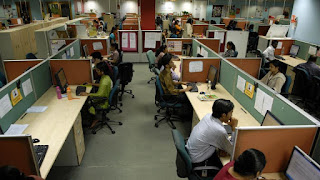
HCL’s “TechBee Program” Offers Early Career Opportunities to 12th Pass Out Students

TechBee, HCL’s Early Career Program, is a work-integrated higher education program which contributes to the “Skill India” mission of the government. As a part of HCL’s new people strategy for 10+2 students, the program offers IT engineering jobs by equipping the students with future-ready skills. It prepares students technically and professionally for entry-level IT jobs in HCL where candidates undergo an extensive 12-month training to become software engineers. While working at HCL, students may also enroll in Graduation Degree program offered by reputed universities like BITS Pilani and SASTRA University.

Interested students who wish to enroll for the program undergo an entrance test. The program provides a combination of classroom training and on-the-job training, making them self-reliant at the completion of the program. During the entire period of training, enrolled students are paid a stipend of Rs 10,000 per month.

HCL started this program in 2017 with an aim to hire the best talent and enable them to achieve financial independence at the start of their career. So far, over 2000 students have done TechBee program and are now working with HCL.  In these uncertain times, TechBee will enable students to earn a degree from leading universities that HCL has partnered with as part of this program

Key highlights of TechBee

Job First – Job Assurance with HCL, a leading global technology company
Financial Independence – Become financially independent since stipend starts from the first month
Higher Education – Earn a degree from India’s reputed technical institutions like BITS Pilani and SASTRA University
TechBee – HCL’s Early Career Program is clustered into the following sets:
Foundation Training Program – Technical foundation training to create a deployment-ready talent pool
Technology / Domain Training – Stream-specific training to ensure that all tasks pertaining to the role can be performed
Role Specific Training – Hands-on project work to be assigned during the professional practice term
The candidates will also learn the fundamentals of Information technology, relevant software tools, processes and life skills during these 12 months of training.
Upon successful completion of the training, candidates get to work on prestigious projects at HCL Technologies in areas of Application and Infrastructure Support, Testing and CAD Support.
Financial assistance is arranged in a way that there is no financial burden on parents or students. Get 100% program fee waiver (if you score 90% and above in your training) and 50% fee waiver (if you score between 85-90% in your training).
Students from Pan India and who have completed their class XII in 2019 and 2020 are eligible to apply. 
Students can visit: https://registrations.hcltechbee.com/HCL/ to apply for the HCL SAT entrance exam & Last date of registrations is 30th June 2020.

Total Pageviews