Monday, March 17, 2014

UN Sets New Standards To Improve E-Health Interoperability


The International Telecommunication Union (ITU), a UN agency focusing on the information and communication technologies, has offered its first stage approval to an important standard enabling an exchange of multimedia health data between health provider, a controlling function and patient.

The new standard will enable different e-health systems to smoothly exchange patient health data in both low- and high-resource settings, making it ideal for applications in both developed and developing countries.

According to e-Health experts in ITU, a combination of a common data definition with connectivity across different systems – ranging from the personal health and point-of-care devices described in Recommendation ITU-T H.810 to a range of health management back-ends – will provide simple, secure and scalable interoperability.

ITU Secretary-General Hamadoun I. TourĂ© noted, “In addition to technical issues, 
discussions on e-health encompass legal, ethical, cultural, economic and regional aspects. We have seen increased impetus by the e-health community to engage with ITU in order to facilitate a rapid rollout of these technologies that have such a valuable role to play in bolstering global health initiatives.”

The development of Recommendation ITU-T H.860, Multimedia e-health data exchange services: Architecture, services and data dictionary was led by ITU Member Platform Health, a non-profit organisation, based on successful reference implementations in a range of countries in the Middle East, Asia and Africa.

The common health schema of Recommendation ITU-T H.860 is applicable to a wide spectrum of diseases (non-communicable, communicable, maternal/child, trauma, etc.), interventions (preventive, curative, palliative), and health IT systems (from simple standalone, to integrated care, web services and mobile applications).

Source: Agencies 

Sunday, March 16, 2014

Will Rajeev Suri Succeed As Nokia's Next CEO?


Rajeev Suri, the head of Nokia's telecoms network equipment division, is likely to become the Finnish group's next chief executive following the sale of its handset business to Microsoft , a newspaper report said recently.

Helsingin Sanomat newspaper, citing sources familiar with board discussions, said Suri was the strongest candidate to succeed Stephen Elop who is due to move to Microsoft once the 5.4 billion euro ($7.5 billion) handset deal is closed.

The companies have been expecting to finalise the deal by the end of March, and the newspaper said the board of Nokia would nominate a new chief executive shortly after that.

Indian-born Suri has been widely considered the leading candidate for the post as in recent years he has helped the network equipment division, Nokia Solutions and Networks (NSN), turn profitable with a drastic restructuring plan and by ditching unprofitable businesses. 

However, NSN recently reported its fourth-quarter sales fell 22 per cent from a year earlier, raising concerns about its growth prospects.

NSN, which was originally a joint venture of Nokia and Siemens, accounts for about 90 per cent of Nokia's sales after the handset deal.

Nokia declined to comment on the CEO selection process. Since last autumn, the company has been temporarily led by chief financial officer Timo Ihamuotila.

"We will talk more about the Nokia strategy, structure and organisation around the closing of the pending transaction," said spokeswoman Maija Taimi. 


CA Technologies in Bangalore Will House 400 Employees


IT firm CA Technologies said it has set up a new centre in Bangalore for developing differentiated, next generation solutions in emerging technologies. 

The new facility, which complements CA Technology's centre in Hyderabad, will focus on organic innovation in emerging technologies like mobility, digital payments, Big Data, data science/advanced analytics, it said in a statement. It has a floor area of approximately 50,000 sq ft and will house more than 400 employees, including engineers and developers. 

The centre will tap into the talent base in Bangalore to further the development of differentiated, next generation solutions in emerging technologies, the statement added. Organic innovation is at the heart of CA and the new Center will enable greater collaboration and faster product development across a wide range of emerging technologies, CA Technologies General Manager (New Business Innovation) Ram Varadarajan said. 

"Along with our centre in Hyderabad, we are making important investments in research and development in India to tap into the 'world-class' talent available in this market," he said. CA Technologies recently set up a centre in Santa Clara, in the heart of Silicon Valley. The work done by development teams in Santa Clara and Bangalore contributed to the recent launch of CA's Management Cloud for Mobility. 

Thursday, March 13, 2014

What's New On Net As WWW Turns 25 Yrs?


What next for the internet?’ asks the Institution of Engineering and Technology on the 25th anniversary of the worldwide web

To mark the ‘silver jubilee’ of the web, the Institution of Engineering and Technology (IET) is drawing attention to the huge contribution the internet has made to society while calling for a global debate about how we develop the web and improve digital skills to make sure it continues to create opportunities and enhance people’s lives over the next 25 years.

Dr Mike Short CBE from the Institution of Engineering and Technology said: “In a recent US survey, 76 per cent of people believed the web has been a positive force for society. This is encouraging and, given that we have really only scratched the surface with what the web can do, the potential for it to further improve our daily lives is still considerable.

“But we now need an agreed vision for the web for the next decade – and on how we will address critical challenges such as security, capacity and capability. We must also do more to create the necessary digital skills to enable the Web to achieve its full potential. Currently, the UK is facing a well-documented shortage of these technological skills.”

The wish-list for the internet over the next few years includes:

*   A wider range of content in a greater number of languages
*   Trusted e-learning resources
*    Greater inclusion of, and accessibility for, groups currently not engaged with the internet such as large parts of the developing world, the older generation and those with visual and audio impairments
*  Further innovation in web technologies, for example language and format conversion
*  New thinking about how we operate commercially in a digital world, with a broader choice of ecommerce and payment options
*  Global governance and standards for data privacy and security, including techniques such as human factors and user-based design to improve user confidence and adoption.

The internet has revolutionised business practices and created all sorts of new opportunities for communication and interaction – first with email and more recently with social media. We can expect to see social media transcending individual platforms such as Facebook or Twitter to bring together contacts across all platforms in the ongoing bid to create web technologies that allow people to communicate more widely, more easily and more often.

It won’t only be people who benefit from searching the web for information. Computers will be able to analyse the web to find data from a range of sources, linking data and identifying patterns. So in the future a faulty product or health scare could be addressed by machines scanning the web to find all available data to better prevent and prepare for future incidents.

Finally, improved usability depends on a web infrastructure that allows us to connect to the web on demand - any time, any place – without having to worry about how the connection is made. To overhaul the existing infrastructure to provide universal high-speed broadband coverage is prohibitively expensive. Instead, availability could be achieved by bringing together technical standards, embedding greater intelligence in the network architecture and introducing more proactive and innovative regulation to allow individual devices or appliances to find connectivity on demand.

TE & Alcatel-Lucent Solution Cut Cost In Mobile Broadband Access


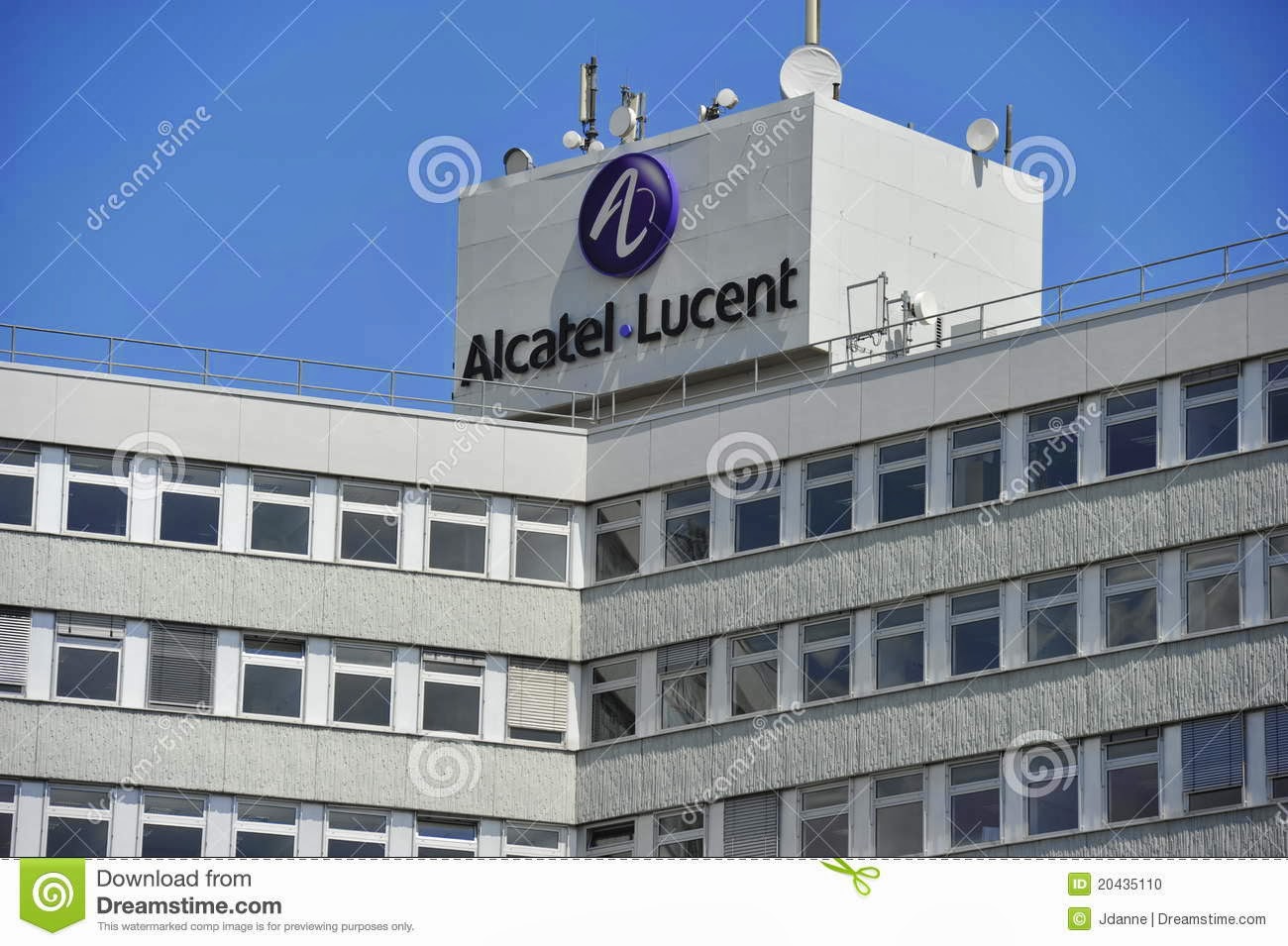
TE Connectivity (TEL) and Alcatel-Lucent, world leaders in electronic connectivity, have developed a solution allowing mobile operators to reduce the time, materials and power required to connect customers in high-capacity locations such as sports stadiums, train stations and business parks. The solution delivers the first of its kind common digital interface between the Alcatel-Lucent mobile Ultra-Broadband access portfolio and the TE FlexWave, digital Distributed Antenna Systems (DAS). It will be available for commercial deployment during the second quarter of 2014.

DAS networks deliver enhanced coverage and capacity to subscribers in high-traffic locations. With the ability to support multiple service providers across multiple technologies and multiple frequency bands – the TE FlexWave (Prism & Spectrum) digital DAS products enable huge efficiencies for operators. However, even with the efficiencies of TE’s DAS, the DAS still needs to connect to the macro network, which previously required each operator’s base station to be equipped with RF processing and attenuation panels. 

The Alcatel-Lucent and TE pre-integrated solution removes the need for RF processing and attenuation panels on site which reduces physical equipment by more than 50% and cost of materials by 40%. Additional cost savings will also be achieved by using less power (equipment consumption & cooling), space and fiber utilization, resulting in operational improvements and meeting sustainability demands. By deploying the new solution in large, high-traffic shared-operator venues, mobile operators will be able to meet demand for coverage and capacity while lowering their cost of ownership.

Key Facts
*  Alcatel-Lucent and TE Connectivity are teaming up to save costs and power for operators deploying bandwidth in a private shared-operator location owned by a third party – such as sports stadiums or hotel complexes or wherever DAS may already be supplying multi-vendor coverage.
*   Pre-integrated solution cuts the time and space required to deliver mobile ultra-broadband connectivity at these locations.
*   Interoperability has been developed at the Common Public Radio Interface (CPRI) between the Alcatel-Lucent lightRadio Baseband Unit (BBU) and TE Digital DAS.
*   Alcatel-Lucent will provide a CPRI interface that plugs directly into the FlexWave universal host.
*    This is the first solution of its type. TE’s digital DAS is a patented technology – the only DAS that can accept a direct baseband interface along with legacy RF services over a single DAS network.
*    This solution allows customers to migrate their existing ALU and TE solutions to CPRI and support legacy services and can be applied to existing FlexWave deployments.


Sochi Olympics 2014 Used Rostelecom For Web Protection


Arbor Networks, Inc., a leading provider of DDoS and advanced threat protection solutions for enterprise and service provider networks, announced today that they provided 7x24 Enhanced Event-Based Technical and Threat Mitigation Support for the 2014 Sochi Winter Olympic web properties for Rostelecom, Russia’s largest service provider.

“This is the third Olympic Games that Arbor has played a role in ensuring the availability of its Web properties. This was a significant undertaking that went extremely well because of our excellent working relationship with Rostelecom and their teams,” said Arbor Networks President Matthew Moynahan. “This was a true team effort on both sides, and great validation of the importance of having multi-layered DDoS protection.”

“There was a huge amount of work done by Arbor consulting engineers and developers during preparation phase of the Event, and as a result we were able to implement new features to mitigate advanced DDoS attacks and to increase our mitigation capacity twice,” said Rostelecom’s Head of Network Security Muslim Medzhlumov. “Due to the collaboration we have with Arbor, we were able to deliver continuous services to all of our customers during the Sochi Olympic Games.”

Multi-Layered DDoS Protection
Rostelecom was able to protect Sochi Olympic web properties with best-practices DDoS defense in a single integrated solution that delivers mitigation from the data center to the cloud. Arbor’s products and services help protect against the full spectrum of DDoS attacks, including volumetric, application-layer, state-exhaustion (e.g. targeting firewall/IPS), blended and multi-vector attacks.

Arbor’s Security Engineering & Response Team (ASERT) was proactively monitoring botnets and malware families via ATLAS, a globally scoped threat intelligence service developed in conjunction with nearly 300 service provider customers who share anonymous traffic data with Arbor. ATLAS gives Arbor security researchers unique insight into 80TB/sec of global Internet traffic, helping them to identify threats and develop protections before they impact customer networks. Additionally, Arbor’s Technical Assistance Center (ATAC) and Arbor CloudSM Security Operations Center provided 7x24 around the clock enhanced remote threat and technical support for Rostelecom.

World Leader in DDoS Mitigation
Arbor Networks’ customers include many of the world's service providers and largest enterprise networks in use today. According to a December 2013 report from Infonetics Research titled, DDoS Prevention Appliance Market Outlook, Arbor Networks was cited as top supplier of DDoS prevention solutions overall as well as in the Carrier, Enterprise and Mobile market segments. 

New Power Packed Digital Wallet Solution From Mahindra Comviva


Mahindra Comviva, the global leader in providing mobility solutions has announced the launch of its mobiquity Wallet, a cutting-edge digital wallet platform. This is amongst the first of its kind fully integrated digital wallet platform that supports NFC, QR codes and Bluetooth Low Energy (BLE). It will offer security, ease of use and rich features to the customers of banks, telecom operators and retailers across the globe. The platform will bring in agility to develop an ecosystem and increase revenues from existing customers and simultaneously boost customer acquisitions.

Mahindra Comviva’s mobiquity Wallet is a secure, easy to use and feature-rich digital wallet solution that works on multiple connected devices. It offers support for personalization, multiple value-added services and payment methods to enrich consumers’ path to purchase. To the wallet provider and their partners, it offers a robust and flexible platform, combining innovations in payments with attention to human factor, behavior-centered experience design and cutting edge digital technology.

Speaking on the occasion, Srinivas Nidugondi, Senior VP & Head of Mobile Financial Solutions, Mahindra Comviva said “Consumer needs are constantly evolving and we are proud to launch a digital wallet solution that focuses on consumer experience and purchase journey for payments. mobiquity Wallet aims to deliver a connected experience to the consumers and is designed to support a large and complex ecosystem.”

mobiquity Wallet leverages enabling technologies such as NFC, QR code and BLE for enhancing user experience by offering context aware payments. It bundles location based promotions, automated coupon redemption and loyalty card selection during checkout enabling single click payments. It can support integration into a merchant’s existing mobile application or web portal through checkout or allow in-app shopping by simply integrating into the merchant’s ERP.

“Our mobiquity Wallet will allow businesses to re-engage and connect directly with their consumers, drive growth, and deepen their brand image by staying relevant to the change in markets and behaviours’,” added Srinivas.

The solution will enable businesses and their partners to fully leverage the potential of social media and data analytics for word of mouth advertising and one-on-one marketing. It will also help realize the full potential in a customer’s path to purchase, from discovery & payments to inducements & loyalty.

Mahindra Comviva’s award-winning mobiquity platform is a widely deployed solution that is scalable, flexible and feature-rich. Its ability to seamlessly integrate with third party systems fosters an open eco-system. With over 120 deployments, Mahindra Comviva has garnered extensive experience of deploying large scale mobile payment projects with numerous integrations to banking systems and other ecosystem partners. Mahindra Comviva is among the top 3 mobile financial technology providers across the globe processing over US$20 billion in payment flows, handling millions of transactions every day and serving 700+ million consumers globally.

Total Pageviews